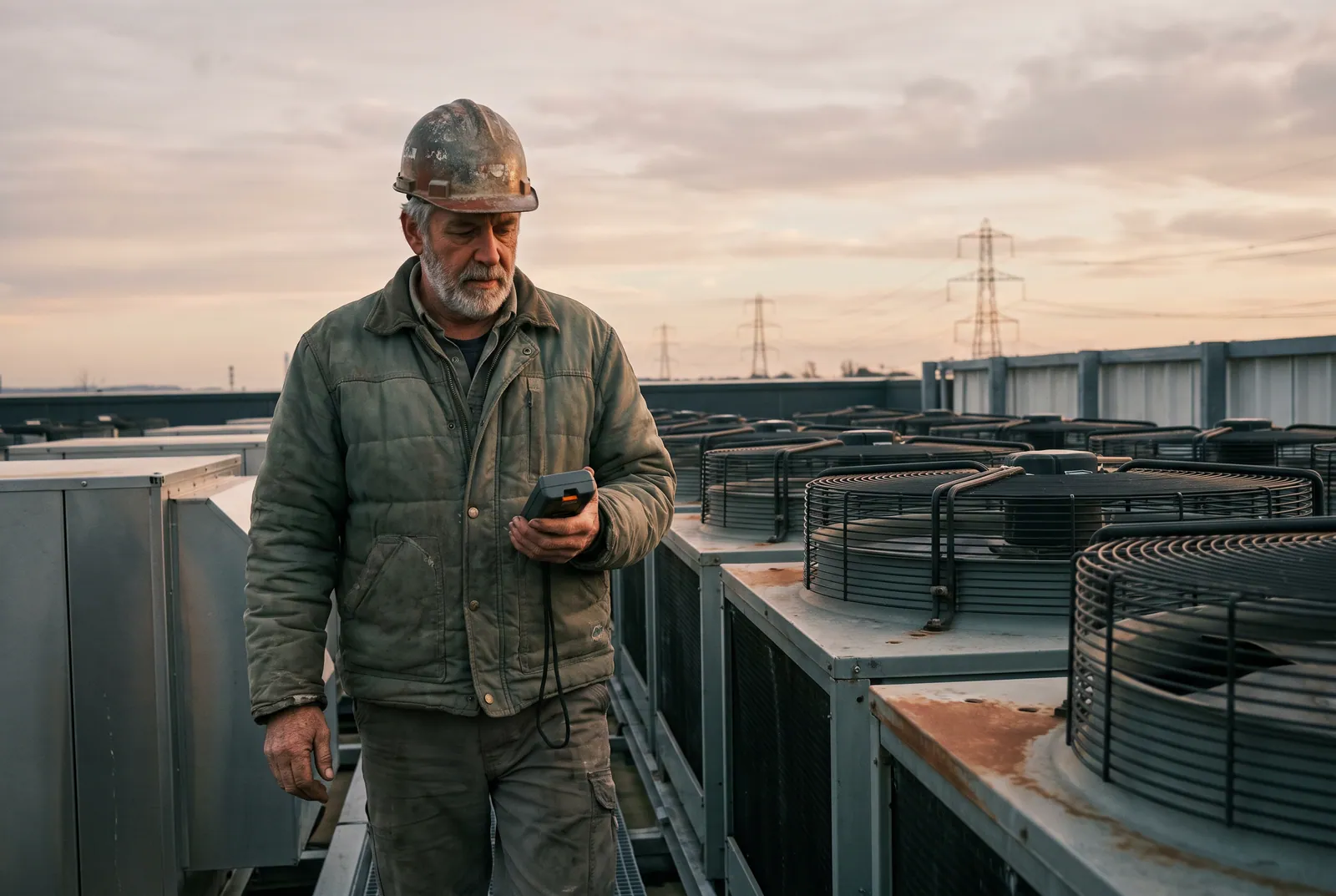
IT outages are becoming less frequent but more expensive. In the Uptime Institute’s Annual Outage Analysis 2026, 57% of operators said their most recent major outage cost more than $100,000. One in five said it cost more than $1 million. Most incidents trace back to power, networks, third parties and broken procedures, so recovery has to be designed before it is needed.
How much does an IT outage really cost?
The direct bill is only part of it. Uptime asks respondents to include direct, opportunity and reputation costs, from the outage to full recovery. The latest figures point in one direction:
| Indicator | Figure | Source |
|---|---|---|
| Most recent major outage cost more than $100,000 | 57% of respondents | Uptime Institute, 2026 |
| Most recent impactful outage cost more than $1 million | One in five | Uptime Institute, 2026 |
| Operators with an impactful outage in the past three years | 50% | Uptime Institute, 2026 |
| Impactful outages rated serious or severe | 10% | Uptime Institute, 2026 |
| Annual cost of unplanned downtime, Global 2000 companies | $600 billion | Splunk with Oxford Economics, 2026 |
| Average cost of downtime per minute | $15,000 | Splunk with Oxford Economics, 2026 |
The Splunk study with Oxford Economics, based on 2,000 executives, says the $600 billion figure grew 50% in two years. It also reports an average 3.4% drop in stock price after a downtime event. It is vendor research, so read it as an order of magnitude.
Uptime explains why costs rise while frequency falls. Inflation, labor costs and contract penalties play a part. The main reason is concentration: more services and businesses now depend, directly or indirectly, on a single data center or cloud availability zone.
Why do IT outages happen?
Uptime separates the causes of data center outages from the causes of wider IT service outages. Four patterns stand out.
1. Power is still the largest single cause
Power caused 45% of impactful data center outages in Uptime’s 2025 survey data, down from 54% in 2024. UPS failures, transfer switches and generators dominate. Grid constraints and dense AI workloads add new pressure.
2. Networks fail, mostly after a change
Networking and connectivity issues are the most frequent cause of IT service outages, cited by 23% of respondents. Inside network outages, configuration and change management failures lead at 41%. A routing rule pushed on a Friday evening is a classic example.
3. Third parties fail in ways you cannot see
Cloud, telecom and colocation providers have accounted for most publicly reported outages over ten years of Uptime tracking. When a third-party service fails, 54% of affected respondents point to software or configuration errors. Your contract covers the provider, but your customers only see your service go dark.
4. People skip the procedure
92% of respondents say human error contributed at least in a minor way to their last impactful outage. Among major human error outages, 59% involved staff not following procedures. Uptime also found that 87% believe their last impactful outage was avoidable with better management, processes or configuration.
Why are outages getting longer?
Most publicly reported incidents still end within 12 hours, 55% according to Uptime. Yet the share lasting more than 48 hours has grown for two years in a row. Damaged fiber and subsea cables are a growing cause, and they need physical repair across several organizations.
The pattern is clear: risk is moving outside the walls of the data center. Still, only about 40% of operators assess third-party and systemic risks in their resiliency reviews. Most companies test what they own and assume the rest will hold.
How do you design systems for recovery?
Preventing every failure is impossible. The goal is to make each failure small, visible and short. Four disciplines do most of the work.
Know your dependencies
List every service a critical process needs: identity, database, payment gateway, DNS, the carrier, the cloud region. For each one, write what happens when it stops. A checkout that depends on one region and one payment provider has two single points of failure, whatever its uptime target says.
Observe business events, not only servers
CPU graphs show that a server is busy. They do not show that orders stopped confirming ten minutes ago. Record each business event with who acted, what happened and when. Then an alert can say “payments failing for one bank” instead of “latency high”. Uptime respondents rank monitoring and analytics as their most effective resiliency investment, at 53%.
Write runbooks people can follow under stress
A runbook is a short, tested procedure for a known failure. It says how to detect it, who decides, what to do and how to confirm recovery. Since failing to follow procedures is the top cause of human error outages, procedures must be short, current and easy to find at 3 a.m.
Test failure on purpose
Restore a backup to a clean environment. Switch traffic to the secondary site. Revoke a certificate in staging. Measure how long recovery takes and compare it with what the business can tolerate. A recovery plan that has never been executed is an assumption.
A practical checklist for leadership teams
This is general analysis, not financial or insurance advice. Use it to start a review with your technology and operations leads:
- Rank your critical processes by revenue or service impact per hour of downtime.
- Set a recovery time and a data loss limit for each process, approved by the business owner.
- Map dependencies, including identity, DNS, carriers, cloud regions and SaaS providers.
- Remove single points of failure where the cost per hour justifies a second path.
- Control changes: peer review, staged rollout and a tested rollback for every production change.
- Instrument business events so alerts describe customer impact, not only machine metrics.
- Keep runbooks short and tested, with a named decision owner for each incident type.
- Rehearse failures at least twice a year, including a third-party outage you cannot fix yourself.
- Review every incident without blame, and track fixes until they are closed.
How we see it at Blackwood
Blackwood Stone Holdings is an applied research and development company specialized in artificial intelligence and advanced engineering, founded in 2009. We treat recovery as a property of the architecture, not a document in a shared drive. The first question in any incident is what happened, in what order and why. That answer only exists if the system recorded it.
That is why we design event architecture with causal tracing from the first release, and why we build the foundation before the features. An outage is expensive. An outage you cannot explain afterward costs more, because it will happen again.